
Elementary School
Elementary School is a time when curiosity begins to turn into deeper understanding. Guided by the IB Primary Years Programme (PYP), students learn to ask good questions, explore ideas, and make connections across subjects and the world around them.
Learning takes many forms. Classroom inquiry is complemented by projects, field trips, presentations, and exhibitions that give students opportunities to apply what they know and share what they have learned. As they grow, students learn to approach new challenges with confidence, think for themselves, and build the skills they will need for the Middle Years Programme (Grades 6 to 10).
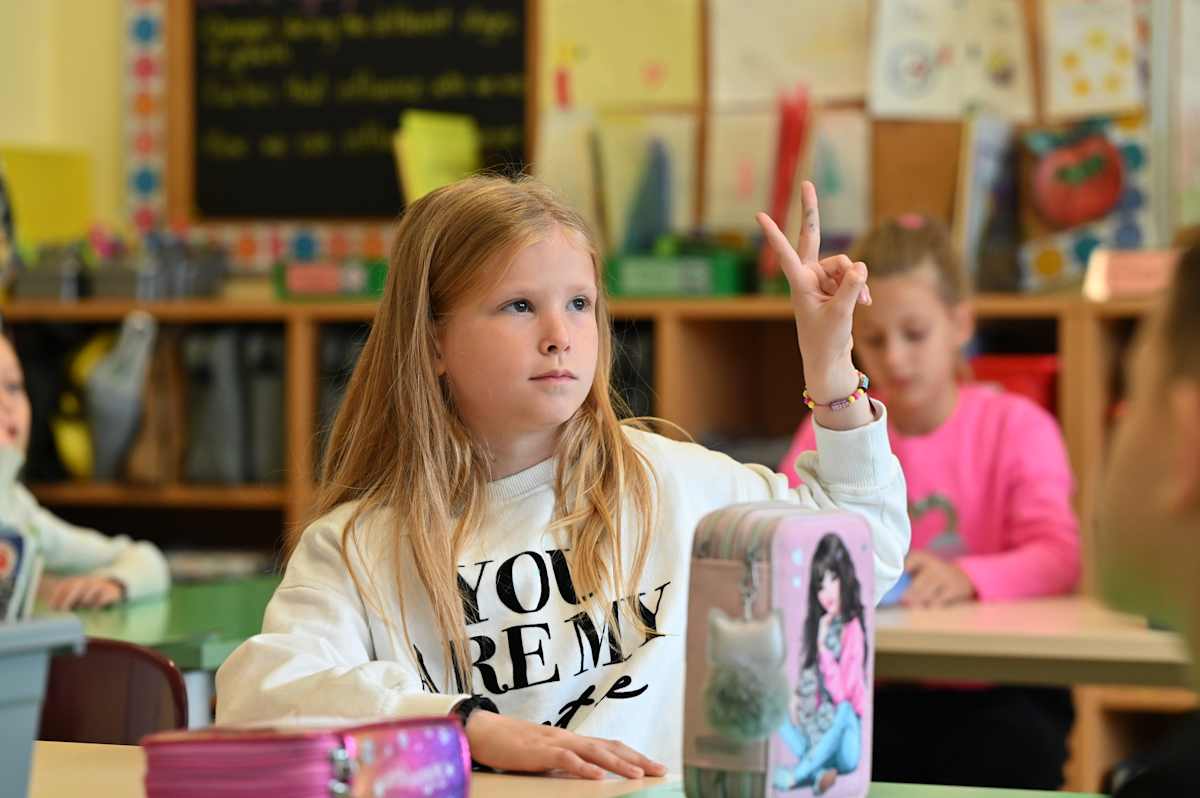
Purpose built spaces give students room to learn, create, collaborate, and feel at home in their school.
Explore each year
Every year group follows its own units of inquiry. Choose a year to see one of the questions your child would explore.
PreK 3
Our youngest learners discover school through play, friendship, and hands on exploration. Children should show age appropriate social interaction and independence, and be fully toilet trained.
Early Education Center program →Friendship skills help us build positive relationships with others.
Learner profile focus: communicators, caring, thinkers.
PreK 4
Children look closely at the world around them, from healthy routines to the jobs that make a community work, and learn to put their ideas and feelings into words.
Early Education Center program →The world is made of living and non-living things.
Learner profile focus: reflective, balanced, inquirer.
Kindergarten
The last year in the Early Education Center. Children explore family, traditions, and stories, and get ready for the routines of Grade 1.
Early Education Center program →Stories are reflections of ourselves.
Learner profile focus: knowledgeable, thinkers.
Grade 1
All six transdisciplinary themes now run through the year, and daily learning includes Literacy, Numeracy, Science, and Social Studies alongside specialist classes.
PYP Grades 1 to 5 →Inventions and innovations have changed people’s lives over time.
Learner profile focus: inquirer, thinker, reflective.
Grade 2
Students look at how communities work, from cultures and traditions to trading and banking, and use poetry and folklore to express their own ideas.
PYP Grades 1 to 5 →Human-made systems are created to solve problems and help us organize ourselves.
Learner profile focus: reflective, principled, knowledgeable.
Grade 3
From food and culture to the planets and the explorers who changed how we see the world, Grade 3 students connect big ideas to their own lives.
PYP Grades 1 to 5 →Protecting children’s rights ensures their well-being and creates a more just and caring society.
Learner profile focus: caring, open minded.
Grade 4
Students study how the brain learns, how ancient civilizations shaped today’s societies, and how people respond when a crisis hits.
PYP Grades 1 to 5 →People can make choices to support sustainable energy use.
Learner profile focus: principled, reflective.
Grade 5
The final PYP year closes with the Exhibition, where students lead an inquiry of their own and present it to the community before moving on to the Middle Years Programme.
PYP Grades 1 to 5 →Living things depend on each other and the environment in which they live.
Learner profile focus: reflective, thinkers, inquirers.
Six themes, one connected curriculum
Each unit begins with a broad theme that gives students something meaningful to explore. From there, they ask questions, investigate a central idea, and draw on different subjects to deepen their understanding. More on instruction and assessment
01Who We Are
An inquiry into the nature of the self, including personal beliefs and values, and what it means to be human, from well-being to families, friendships, communities, and cultures.
02Where We Are in Place and Time
Personal histories, homes, and journeys, the discoveries that have shaped human experience, and how individuals and civilizations are connected, locally and globally.
03How We Express Ourselves
The ways people discover and express ideas, feelings, culture, beliefs, and values, and how creativity is reflected, developed, and enjoyed.
04How the World Works
The natural world and its laws, how scientific understanding is developed and applied, and the impact of science and technology on society and the environment.
05How We Organize Ourselves
How organizations are structured, how societies make decisions, and how economic activities affect people and the environment.
06Sharing the Planet
The rights and responsibilities that come with sharing finite resources, how communities form and function, access to equal opportunities, and peace and conflict resolution.
A day at NOVA
Focused learning, creative and physical activity, time with friends, and time to recharge. A clear rhythm helps children know what to expect.
- Arrival
- Breakfast
- Morning Circle
- Language and Literacy
- Math Exploration
- Outdoor Play
- Inquiry Centers
- Lunch
- Quiet Time
- Snack
- Inquiry Centers
- PE or Dance
- Outdoor Play
- DEAR and Morning Meeting
- Core Class
- Snack and Recess
- Specialist Classes
- Core Class
- Lunch and Recess
- Afternoon Block
Support around every child
Children grow best when their academic, social, emotional, and physical needs are looked after together.
English as an Additional Language
As a member of the WIDA International School Consortium, NOVA uses WIDA standards to assess English proficiency. EAL teachers work in class and in small groups, so children keep learning alongside their classmates.
EAL programLearning Support and Counseling
Push in or pull out support, one to one or in small groups, for learners who need it. Counselors lead guidance lessons twice a month and meet with children individually when needed.
Student Support ServicesHealth Office
Two registered nurses are on duty each school day for first aid, everyday health needs, and screenings. For many children, the Health Office is also a place where someone listens.
Health ServicesElementary Library
On the ground floor of the Elementary building, open 8:00 a.m. to 3:30 p.m., with picture and board books for our youngest readers and research help as they grow.
LibrariesAfter School and Day Care
After School Activities run in trimesters, from yoga, chess, and robotics to choir, ballet, and art. Day Care for PreK 3 to Grade 2 runs until 5:00 p.m. in the Early Education Center.
After School ActivitiesMeals
Breakfast and hot lunch are prepared by our cafeteria staff with professional nutritionists. PreK 3 to Grade 1 have a fixed menu with smaller portions for our youngest learners.
Meal ServiceA thriving school relies on trust, open communication, and an active partnership between home and school. My door is always open.
The joy Mia and Elena felt when going to school each morning was never a coincidence.
News


Elementary School
When families step onto our campus, they often tell us the same thing. They feel a sense of calm energy. A place where many cultures meet, where more than forty nationalities learn side by side, and where every student is known by name and encouraged to find their way.
